Artificial Intelligence
Neural Networks Explained Visually
A diagram-first explanation of layers, weights, activations and how representations form inside a network.
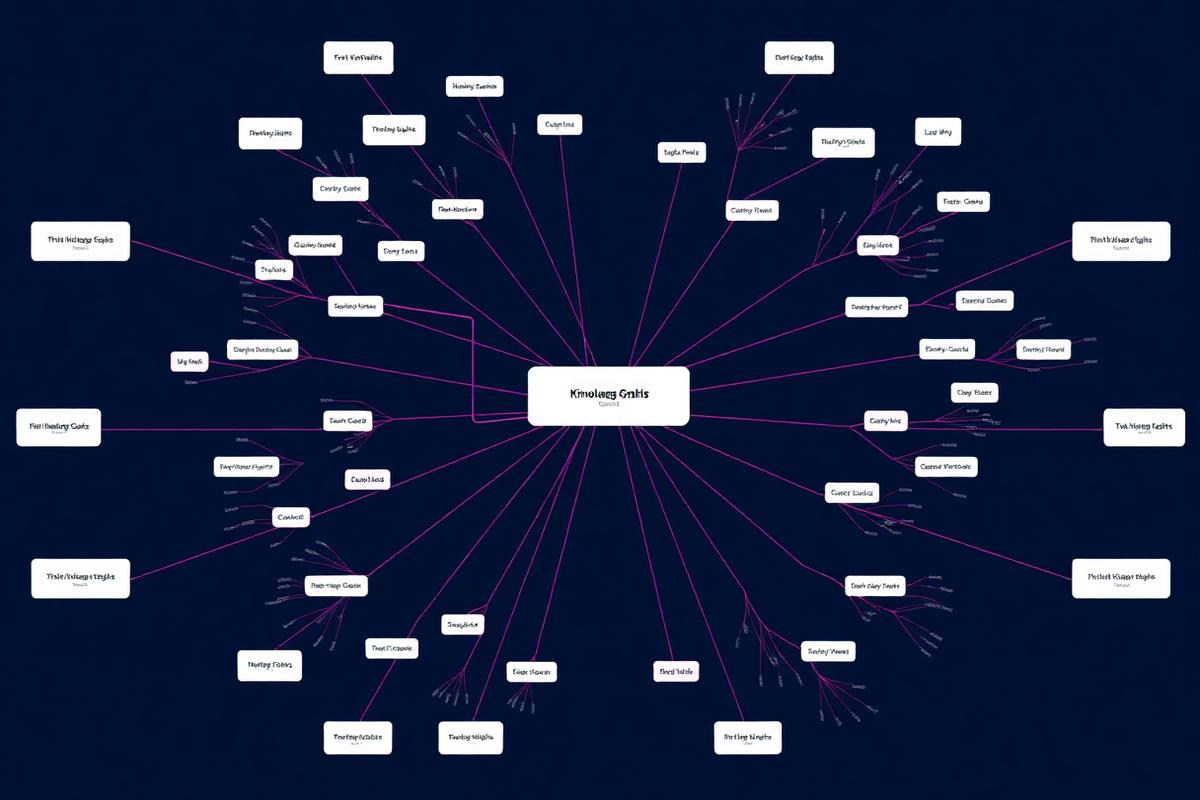
Table of contents
A diagram-first explanation of layers, weights, activations and how representations form inside a network. This guide is structured so you can read it end to end or jump to the section you need.
Why Neural networks matters
Neural networks sits at the intersection of theory and daily engineering practice. This guide explains the underlying ideas in plain language, then shows how they are applied in real projects, so you can move from understanding to doing without wading through a textbook first.
Everything below is written for people who need working knowledge: students preparing for exams, engineers evaluating a method for a project, and developers who need enough physical or mathematical context to build reliable tooling around it.
Core concepts you need first
Before touching software, it helps to be precise about the vocabulary. In artificial intelligence, most confusion comes from mixing up the model (the mathematical description), the method (how the equations are solved) and the implementation (the specific software and settings used).
Keeping those three layers separate makes troubleshooting far easier: a wrong result is either a modelling assumption that does not hold, a numerical setting that is too coarse, or a setup mistake in the tool.
A practical workflow
A dependable workflow has five stages: define the question, choose the simplest model that can answer it, prepare inputs carefully, run and monitor, then verify the result against something you trust. Skipping verification is the single most common cause of confident but wrong conclusions.
Document each stage as you go. A short setup log with assumptions, settings and observations turns a one-off study into a repeatable procedure that colleagues can review.
Worked practical example
The example below is intentionally small so it can be reproduced in a few minutes. Start from it, then increase complexity one variable at a time. If the result changes in a way you cannot explain, stop and investigate before adding anything else.
Validation and verification
Verification asks whether the equations are being solved correctly; validation asks whether the right equations are being solved. Both are needed. Mesh or resolution studies, sensitivity checks on key parameters and comparison against analytical solutions or published experiments are the standard tools.
Report uncertainty honestly. A result presented with its assumptions and limits is far more useful than a single number presented as fact.
Key Takeaways
What to remember
- Neural networks is best learned by combining a clear mental model with one small reproducible example.
- Separate modelling assumptions, numerical settings and software configuration when debugging.
- Always verify results with a resolution or sensitivity study before drawing conclusions.
- Document assumptions so the work can be reviewed and repeated.
Technical Summary
Neural networks is applied by defining the question, selecting the simplest adequate model, preparing inputs carefully, and verifying the outcome. Report results with their assumptions, resolution study and uncertainty so that a reviewer can judge them independently.
Mind Map
Visual overview of Neural networks, from fundamentals to validation.
- Why Neural networks matters
- Core concepts you need first
- A practical workflow
- Worked practical example
- Validation and verification
Common Mistakes
Avoid these
- Jumping into software before defining the question the study must answer.
- Using default settings without checking whether they suit the problem.
- Reporting a single result with no sensitivity or resolution check.
- Mixing units or reference conditions between inputs and outputs.
Frequently Asked Questions
Do I need advanced mathematics to work with neural networks?
You need to be comfortable with the concepts and the vocabulary. Deep derivations help, but a solid conceptual grasp plus disciplined verification takes most engineers a long way.
Which software should a beginner start with?
Start with whatever tool your institution or employer already supports, and prefer open, scriptable options when you are learning, because they make each step visible.
How long does it take to become productive?
Most people can produce a defensible small study within a few weeks of focused practice, provided they build the habit of verifying every result.
Glossary
- Verification
- Checking that a model is solved correctly, independent of whether the model is right.
- Validation
- Comparing model output with experimental or reference data to confirm physical relevance.
- Sensitivity study
- Systematic variation of one input to measure its influence on the result.
References and Recommended Reading
- Peer-reviewed literature and official software documentation for the tools discussed.
- Standard textbooks in the field, cited in each section where relevant.
- Reproducible example files maintained by the Girls in Tech editorial team.
About the author
Amara Okafor
AI & Machine Learning Editor
Machine learning engineer focused on applied deep learning, model evaluation and MLOps for industrial data.
MSc Computer Science · ML engineer in industrial analytics
Recommended next article
How Neural Networks Learn
Forward pass, loss, backpropagation and gradient descent explained step by step with a minimal worked example.
Discussion
Questions and corrections are welcome. Moderated discussion keeps technical threads useful for future readers.
Send a question or correctionGet practical technology knowledge in your inbox
New tutorials, engineering insights and visual summaries. No spam.
Related articles

How Neural Networks Learn
Forward pass, loss, backpropagation and gradient descent explained step by step with a minimal worked example.
Introduction to Artificial Intelligence
What AI actually is, how modern systems are built, and where the practical limits sit for engineering work.